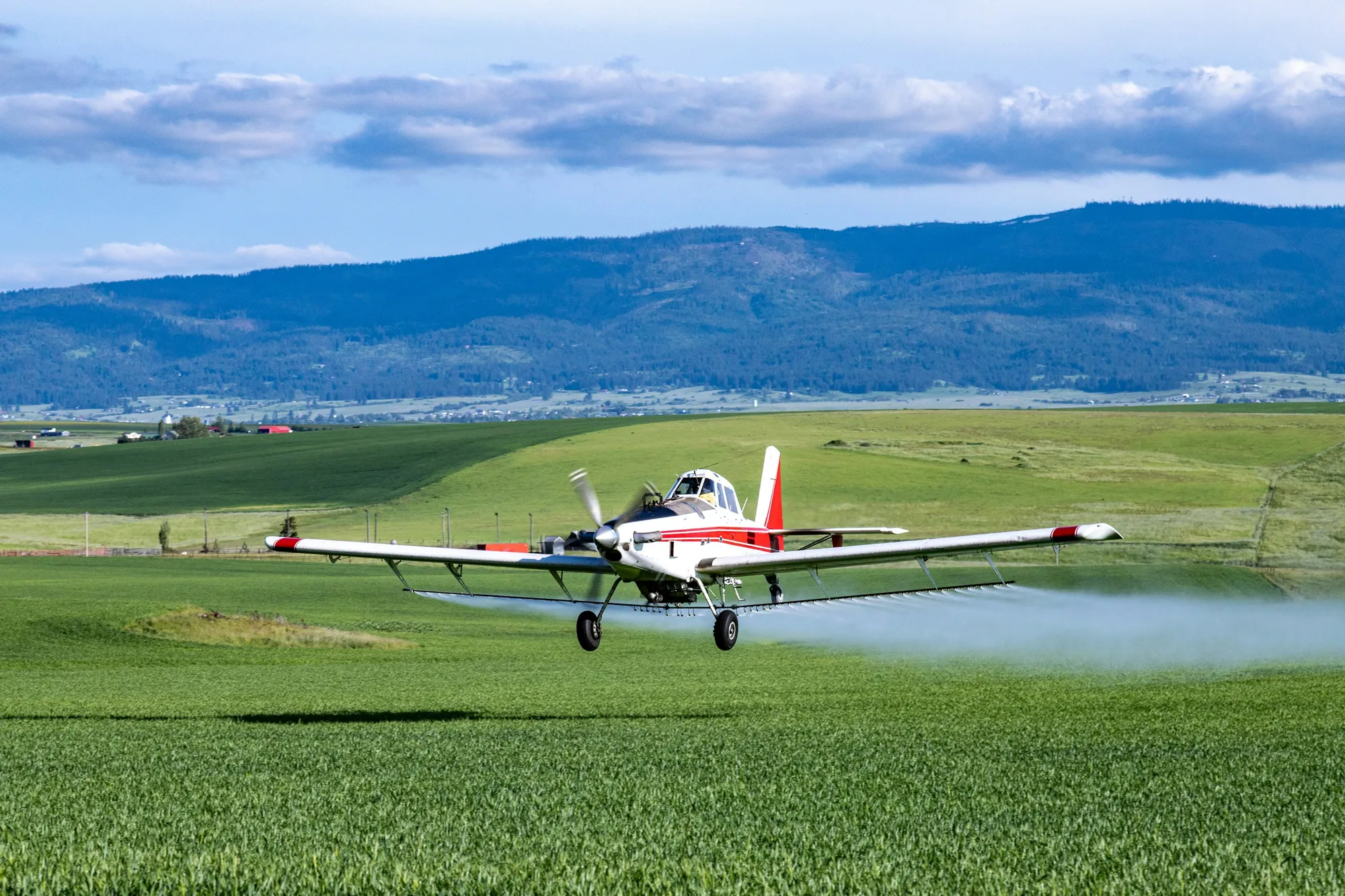
In season, the application lives in notebooks and messages.
This is how it goes at many ag aviation companies: the request comes in by phone, the spray mix is calculated by hand and the report waits until after the last flight.
-
Every request arrives a different way.
Area, crop, product and rate come by message, and whoever goes to the airstrip takes their own notes.
-
The spray mix math is redone for every order.
Rate per hectare times area, product by product, on a calculator or in a spreadsheet only one person understands.
-
Nobody knows how much of the area is already done.
The hectares applied in each duty period stay in the pilot's notebook and are only added up at the end of the job.
-
The report is put together from memory.
Temperature, humidity and wind on the day of the application are looked up weeks later, when the customer asks for the paper.
With Alis, the job starts at the order.
The application order gathers what was contracted, and each duty period entered shows how much of it has been completed.
-
Application order
Customer, area or field block, crop, hectares, target, aircraft and pilot in a single record.
-
Spray mix calculated
You enter the products and the rate per hectare, and the total quantity of each is calculated from the order's area.
-
Parameters and people in charge
Spray volume, swath width, flight height and equipment, with agronomist, CREA, prescription and executing technician.
-
Entry by duty period
Hectares applied, flight hours and temperature, humidity and wind at the start and end of each duty period.
-
Order progress
A bar shows the area already applied over the contracted area, without waiting for the end of the job to add it up.
-
Application report
A PDF with the data of the order and of the applications and the signature fields for pilot, technician, agronomist and customer.
Areas registered once
The customer's farm and field block are stored with the area in hectares, ready for the next order.
Products registered once
The product goes into the registry and is then chosen in the spray mix, instead of typed again for every job.
The fleet up to date, with what Alis already does.
The agricultural operator has its own fleet. That is why the plan brings what Alis already delivers to those who operate aircraft, with nothing to contract separately.
- Digital logbook and TLB to record the flight and the technical discrepancies.
- Maintenance tracking with due items by hour, cycle and calendar.
- Downtime forecasting to plan maintenance outside the peak of the season.
- Schedule with expenses, crew rostering and fueling for the operation.
- Bulletin board, library and operation reports for the team and management.
- Maintenance work orders and inventory to open and manage the work order in the system itself.
- SMS, team training and meetings recorded alongside the operation.
The drone joins the fleet as an aircraft.
Those who apply with a drone register the equipment next to the airplane and open the application order the same way.
- Batteries and cycles under control: each battery has its own cycle history.
- No add-on: drone control already comes in the agricultural plan.
- Same math: the drone counts as one aircraft in the plan's price.
RBAC 137, the records the operator keeps.
Brazil's regulation for agricultural aviation operations has its own rules for the logbook and for the company's records. These are the points that weigh most on the routine.
What the regulation says
- Five years of records: the CDAG holder keeps the list of aircraft operated and the individual record of each pilot, with experience and flight hours. (137.517)
- One line per duty period: the data of one pilot duty period may be recorded on a single line of the logbook. (137.521)
- The locality of the landing area: when operating from an agricultural-use landing area, the pilot records the locality in the logbook. (137.521)
- Documents at the operating site: the logbook is among the documents kept available where the operation takes place. (137.501)
How this shows up in Alis
- Registered fleet: each aircraft with type, registration and serial number, always in its current version.
- Flights in the logbook: the entry keeps who flew, where and for how long, and the history stays available.
- Logbook and application side by side: the order records the service and the logbook records the flight. They are separate entries, and one does not replace the other.
One plan, billed per aircraft.
The price is the same for the first and for the tenth aircraft, and the drone counts as an aircraft. On the annual plan, 10% off.
ALIS Agrícola
- Application orders, areas and products
- Entry by duty period and PDF report
- Digital logbook and TLB
- Maintenance tracking and downtime forecasting
- Schedule with expenses, crew rostering and fueling
- Bulletin board, library and operation reports
- Maintenance work order management and inventory
- SMS, team training and meetings
- Drones in the fleet, with batteries and cycles
- 60 ALIS AI credits per aircraft
How the price is calculated
- Per aircraft: US$ 50 per month for each registered aircraft, manned or not.
- No fleet tiers: the price per aircraft does not change with the size of the operation.
- Annual: US$ 540 per aircraft per year, with the 10% discount already applied.
What is not in this plan
Only the Flight Kit. SMS, team training, inventory, meetings and maintenance work order management are included.
Frequently asked questions
What agricultural aviation operators ask before bringing their operation to Alis.
How is the plan billed?+
Do I need to contract anything separately to use drones?+
What goes into the application report?+
Does entering the application fill in the logbook?+
Does the application order deduct the product from inventory?+
Is there an application map or DGPS integration?+
Can I enter the application on my phone, at the airstrip?+
Does a drone operation follow RBAC 137?+
From order to report, with the fleet up to date.
Tell us about your agricultural aviation operation and the Alis team will show you the application order, the entry by duty period and the fleet control.
I’d rather talk on WhatsApp